The list of activities of the tobacco economists in
the previous chapters was already extensive, but there's one thing not
mentioned yet: their activities in a variety of free market think tanks. To
understand the reason why so many social cost economists ended up in think
tanks, it is necessary to examine some history,
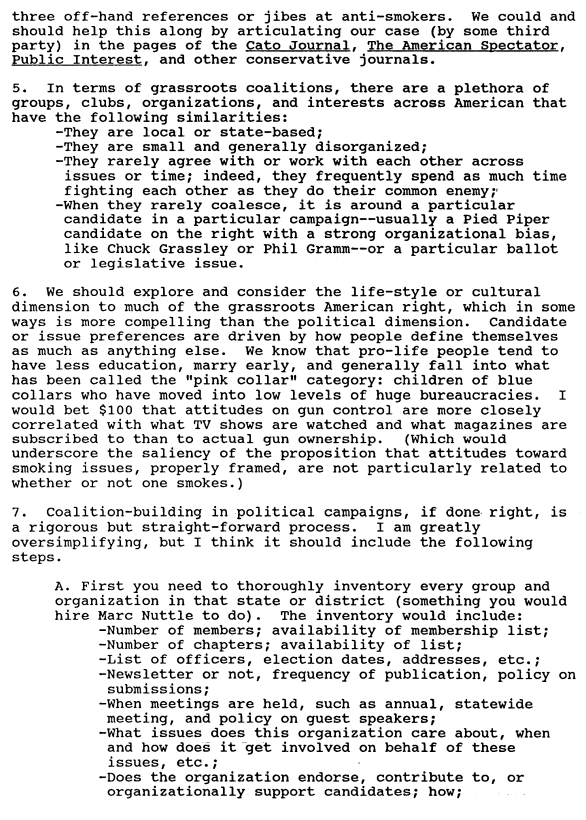
In 1987, the industry evaluated potential allies per US State. The document shows the industry was thinking of partnering with
business allies to create a broad coalition of industries lobbying together to
put more pressure on politicians. It seems politicians at the time were seen as
"aliens", and the industry had difficulties getting in touch with
them.
Gradually though the industry shifted viewpoints and their plans became more and more ambitious:
at first the industry tried to place articles in the media to alter the
public's opinion of tobacco, later it tried to control external allies and
media.
Ultimately the industry took the game to a whole
different level: no longer did they try to influence the politician's mind on
tobacco alone, but instead they tried to alter the politician’s mindset all
together, so they would conclude that tobaccco taxes were unnecessary. They had
to reach people surrounding politicians, like think tank members, to create a
worldview where all environmental sciences would be regarded as junk. Once
again, seeding doubt, and stressing the right wing bias of freedom would be the
path followed by the industry.
This aim was very ambitious: the industry tried to
alter the thinking of broad parts of society!
Again, feeding bias would be the tool. So before looking at the think
tanks involved, it is necessary to have a look at the broader plan, but this idea
to expand their lobbying has received a fair amount of attention in other papers,
so this will only be a short summary.
We'll explore this in the next post, the second part of the report on the secret economists network, hereby focussing on the economists in the secret corruptes network in the 1980's/1990's.